Overcoming CLT Acoustics Challenges: Syntegra's Proven Solutions

You are here: 

Quick Answer

Cross-Laminated Timber (CLT) structures present unique acoustic challenges due to their lightweight and rigid nature, which can lead to increased sound transmission and reverberation. Overcoming these issues requires a comprehensive approach, often involving specialized acoustic design, strategic material choices, and innovative construction techniques. Syntegra Group emphasizes that addressing these challenges is crucial for ensuring occupant comfort and achieving compliance with stringent building regulations.

CLT acoustics

While many advantages have been identified for the use of cross-laminated timber (CLT), an innovative and fire-resistant building frame material offering sustainable solutions to the construction industry – along with cost saving benefits – a number of challenges surrounding its use also exist.
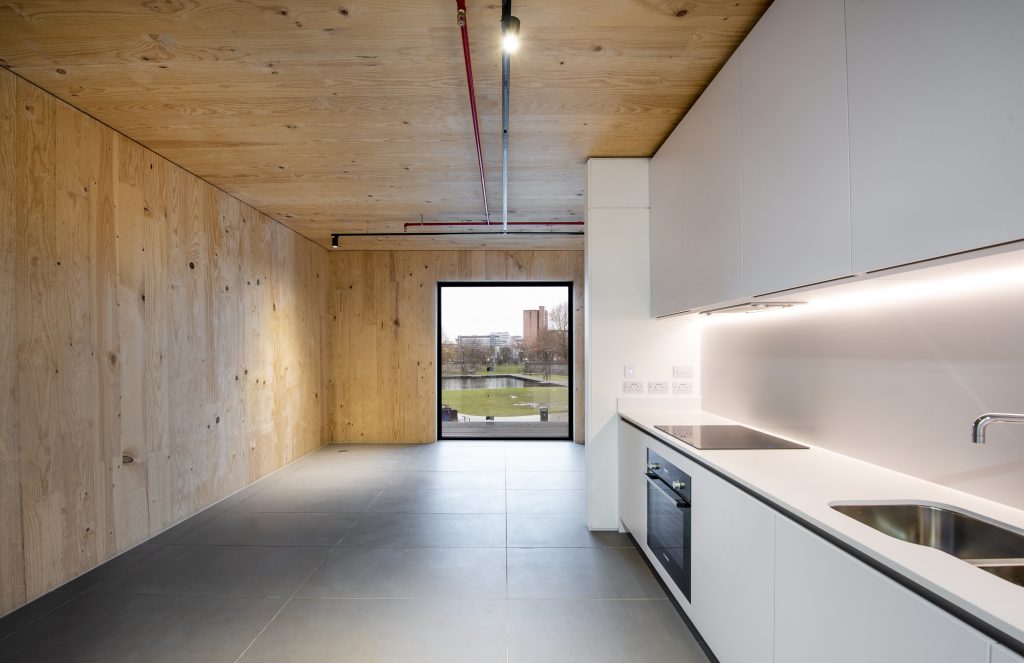
The primary concern relates to acoustics where CLT is used as, due to its lightweight nature, provides less airborne and impact sound isolation than traditional concrete construction which can be problematic when building multi-occupancy residential premises due to building regulations specifying acoustic separation levels between units.

CLT is made by gluing multiple layers of dimensioned timber together to form slabs, then layering those slabs in opposite directions like three-dimensional latticework creating a material strong enough to compete with steel.

Covering the wood can help improve its acoustic performance but challenges remain if the CLT is utilised as a natural design feature and left exposed.

During our work on a number of exposed CLT schemes, Syntegra have devised a very robust floating floor solution, which adds the required mass and acoustic separation to enable such structures to achieve building regulations requirements for acoustics.

Having the main structural element of the building exposed also introduces challenges in terms of flanking noise, which require close co-operation between Acoustic Consultant, Architect and Contractor to ensure they are all addressed satisfactorily and the sound insulation of the building is not compromised.

For external walls, pre-cladding is also something the industry needs to consider when working with CLT to ensure its fire retardancy, lightweight, sustainable credentials and ability to reduce external noise levels to acceptable levels.

Latest Posts

Frequently Asked Questions

1 What specific acoustic challenges are associated with Cross-Laminated Timber (CLT) construction?

While the page title highlights "Overcoming CLT acoustics challenges," the provided content primarily lists the acoustic services offered. These services, such as Architectural Acoustics and Acoustic Sound Insulation Testing, are designed to address the unique sound transmission and impact noise issues often found in CLT structures.

2 What acoustic consultancy services does Syntegra Group provide for building projects?

Syntegra Group offers a range of acoustic consultancy services, including Architectural Acoustics, Acoustic Plant & Noise Impact Assessment, and Construction Noise and Vibration assessments. These services aim to ensure optimal acoustic environments and compliance for various building types.

3 What types of acoustic testing and assessment does Syntegra Group conduct?

Syntegra Group performs Acoustic Sound Insulation Testing to evaluate sound transmission between spaces. They also conduct Acoustic Plant & Noise Impact Assessments and Noise and Vibration at Work Assessments to measure and analyze noise levels and their potential effects.