Question: What is an Ecology and Habitat Survey Report?
Answer: An Ecology and Habitat Survey Report is a technical assessment used to identify habitats, ecological constraints, protected species and biodiversity considerations that may affect a proposed development. The report provides planning authorities with evidence regarding the ecological value of a site and the potential environmental impacts arising from development proposals. Ecology reports often form an essential part of a planning application and help ensure compliance with the National Planning Policy Framework (NPPF), Biodiversity Net Gain legislation and wildlife protection laws. Depending on the characteristics of the site, surveys may identify habitats, protected species, invasive plants, ecological networks and opportunities for biodiversity enhancement. The findings help project teams avoid delays whilst demonstrating a commitment to sustainable development.
Question: When is an Ecology Survey required for planning permission?
Answer: Many planning applications require an ecology survey where development proposals may affect habitats, trees, wildlife or protected species. Local planning authorities frequently request ecological information where undeveloped land, woodland, grassland, watercourses, mature trees or existing ecological features are present.
Ecological surveys are commonly required for:
- Residential developments
- Commercial schemes
- Mixed-use developments
- Care homes
- Schools
- Infrastructure projects
- Agricultural developments
- Change of land use applications
Commissioning an ecology assessment early can help identify constraints before planning submission and reduce the risk of delays, objections or costly redesign work.
Question: What is a Preliminary Ecological Appraisal (PEA)?
Answer: A Preliminary Ecological Appraisal (PEA) is normally the first stage of ecological assessment and is one of the most frequently requested ecological reports during the planning process.
The survey typically combines:
- A site walkover survey
- Habitat classification
- Assessment of ecological features
- Review of surrounding ecological designations
- Protected species risk assessment
- Recommendations for further surveys
The purpose of the PEA is to establish whether the site contains habitats or species that may require further investigation. The survey often identifies whether additional bat surveys, reptile surveys, great crested newt surveys or other protected species assessments are needed before planning permission can be determined.
Question: What is Biodiversity Net Gain (BNG)?
Answer: Biodiversity Net Gain (BNG) is a mandatory planning requirement in England that requires most qualifying developments to deliver measurable improvements in biodiversity compared with pre-development conditions.
The assessment calculates biodiversity value before development and compares this against proposed post-development habitat creation and enhancement measures. The objective is to ensure that development leaves biodiversity in a measurably better state than before development commenced. BNG assessments typically involve:
- Habitat surveys
- UKHab classifications
- Biodiversity metric calculations
- Habitat enhancement proposals
- Long-term management planning
Failure to adequately address BNG requirements can delay planning approval and discharge of planning conditions.
Question: What protected species can affect planning applications?
Answer: Many species within the UK receive legal protection and may significantly influence planning decisions. Ecological surveys frequently assess the likelihood of protected species being present before development proceeds.
Protected species commonly encountered include:
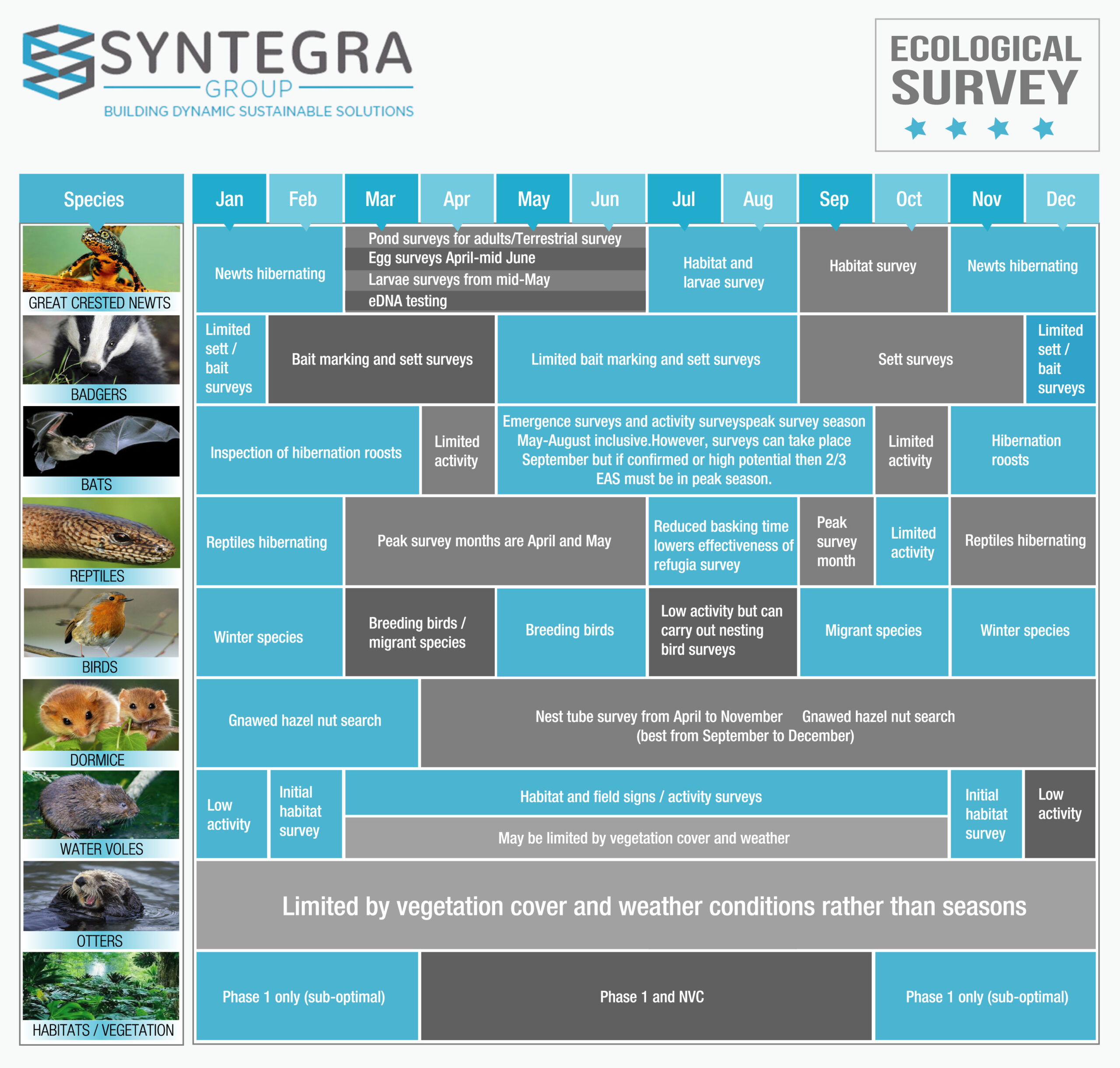
- Bats
- Great crested newts
- Badgers
- Reptiles
- Barn owls
- Nesting birds
- Water voles
- Otters
Where protected species are identified or suitable habitat exists, additional surveys and mitigation strategies may be required. Planning authorities generally expect sufficient ecological information to be available before making decisions on development proposals.
Question: Do I need a bat survey for planning permission?
Answer: You may require a bat survey where buildings, trees, woodland or structures with potential bat roosting features are affected by proposed development.
Bat surveys are among the most common ecological surveys requested by planning authorities because all bat species and their roosts are protected under UK wildlife legislation. A Preliminary Ecological Appraisal will usually identify whether a Preliminary Roost Assessment (PRA) or detailed bat activity survey is necessary.
Failure to adequately assess bat impacts can lead to planning delays, licence requirements and enforcement issues. Early ecological assessment is therefore strongly recommended where bat habitat may be present.
Question: Can trees affect planning permission?
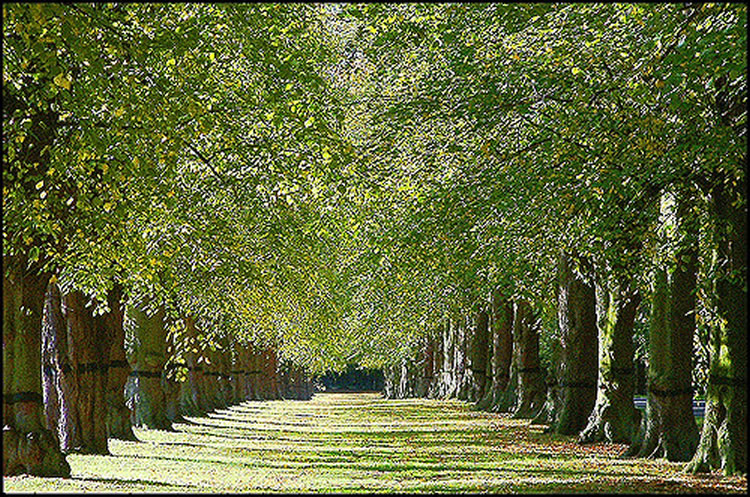
Answer: Yes. Trees are frequently a significant planning consideration, particularly where mature trees, woodland or protected trees exist on or adjacent to a development site.
Where development could affect existing trees, planning authorities often require surveys and reports prepared in accordance with BS5837:2012 Trees in Relation to Design, Demolition and Construction. These reports assess tree quality, root protection areas, potential conflicts and mitigation measures. Tree constraints do not necessarily prevent development, but they often influence site layouts, building footprints, access arrangements and landscaping proposals.
Question: What is an Arboricultural Impact Assessment?
Answer: An Arboricultural Impact Assessment (AIA) evaluates the effects of a proposed development on existing trees and arboricultural features.
The report examines:
- Trees proposed for removal
- Construction impacts
- Root protection areas
- Tree retention opportunities
- Site constraints
- Protective measures
The assessment forms a key part of the planning process where trees may be affected and assists planning officers in determining whether development proposals achieve an acceptable balance between development objectives and tree protection.
Question: Can ecology issues cause planning refusal?
Answer: Yes. Inadequate ecological information or unacceptable biodiversity impacts can result in planning applications being delayed, refused or withdrawn.
Planning authorities have legal duties relating to biodiversity conservation and protected species. Where ecological constraints have not been adequately assessed, planning officers may request further surveys before determining an application.
Common issues leading to concerns include:
- Protected species impacts
- Habitat loss
- Insufficient Biodiversity Net Gain
- Loss of ecological connectivity
- Impacts on designated wildlife sites
- Insufficient mitigation proposals
Robust ecological reports help reduce planning risk and provide evidence that development proposals comply with national and local planning policy.
Question: Why choose Syntegra Group for Ecology and Habitat Surveys?
Answer: Syntegra Group provides comprehensive ecological consultancy services to support residential, commercial, industrial and mixed-use developments throughout the UK. Services include Preliminary Ecological Appraisals, protected species surveys, Biodiversity Net Gain assessments, arboricultural reports, invasive species assessments, ecological mitigation strategies and ongoing planning support. Our ecology consultants work closely with developers, architects, planning consultants and project teams to identify ecological constraints early, minimise planning risk and develop practical biodiversity enhancement strategies. This integrated approach helps clients navigate increasingly complex planning requirements whilst supporting sustainable development objectives and environmental compliance.