Question: What is an Energy Strategy Report and why is it required for planning permission?
Answer: An Energy Strategy Report is a technical planning document that demonstrates how a proposed development will reduce energy demand, lower carbon emissions and comply with national and local planning policies relating to sustainability and climate change. Many local planning authorities now require an Energy Strategy Report to accompany planning applications for residential, commercial, mixed-use, educational and industrial developments.
The report assesses the predicted energy performance of the proposed building, identifies energy efficiency measures and evaluates low-carbon and renewable energy technologies. It demonstrates how the development aligns with the National Planning Policy Framework (NPPF), local development plans, net zero strategies and climate change policies. In many cases, planning consent may be delayed or refused if a development cannot demonstrate compliance with the authority’s energy and carbon reduction requirements.
Question: When is an Energy Strategy Report required by UK planning authorities?
Answer: An Energy Strategy Report is commonly required where local planning policy contains sustainability, energy efficiency, renewable energy or carbon reduction requirements. This is particularly common in London Boroughs, major cities and local authorities that have declared climate emergencies or adopted ambitious net zero commitments.
The requirement typically applies to new build developments, major refurbishments, change-of-use schemes and larger residential projects. Planning officers often expect applicants to demonstrate how the development follows the energy hierarchy of:
- Be Lean (reduce energy demand)
- Be Clean (efficient energy supply)
- Be Green (renewable and low-carbon technologies)
An Energy Strategy Report provides the evidence needed to demonstrate compliance with these planning requirements during the determination process.
Question: What information is included within an Energy Strategy Report?
Answer: A professionally prepared Energy Strategy Report contains a detailed assessment of a building’s predicted energy performance and carbon emissions. The scope typically includes an evaluation of the building fabric, heating and cooling systems, lighting efficiency, ventilation strategy and renewable energy opportunities.
Reports commonly include:
- Carbon emissions calculations
- Fabric energy efficiency assessments
- Building Regulations Part L considerations
- Renewable energy feasibility studies
- Solar PV assessments
- Heat pump evaluations
- District heating assessments
- Energy demand calculations
- SAP or SBEM modelling outputs
- Carbon reduction strategy recommendations
The report provides planning officers with a clear understanding of how the development will meet energy efficiency and sustainability objectives while remaining commercially viable.
Question: How does an Energy Strategy Report help achieve planning approval?
Answer: Local authorities increasingly scrutinise sustainability and climate change impacts during the planning process. An Energy Strategy Report demonstrates that energy efficiency has been integrated into the design from the earliest stages and that reasonable steps have been taken to minimise carbon emissions.
The report can support compliance with:
- National Planning Policy Framework (NPPF) requirements
- Local Plan sustainability policies
- London Plan energy policies
- Climate emergency declarations
- Net zero commitments
- Renewable energy requirements
Providing this evidence early in the planning process can help reduce requests for additional information, support a smoother validation process and minimise delays during the planning determination period.
Question: What is the difference between an Energy Strategy Report and Building Regulations Part L compliance?
Answer: Although both relate to building energy performance, they serve different purposes and are prepared at different stages of a development.
An Energy Strategy Report is generally produced to support a planning application and demonstrate compliance with planning policy. The document focuses on sustainability objectives, carbon reduction targets and renewable energy opportunities.
Building Regulations Part L compliance, by contrast, is a statutory requirement under the Building Regulations and demonstrates that the building meets minimum energy efficiency standards before construction can proceed. Part L calculations typically involve SAP assessments for dwellings and SBEM assessments for non-domestic buildings.
A well-prepared Energy Strategy Report can help ensure a smooth transition from planning approval through to Building Regulations compliance.
Question: Do Energy Strategy Reports assess renewable energy technologies?
Answer: Yes. The assessment of renewable and low-carbon technologies is one of the most important aspects of an Energy Strategy Report. Local planning authorities increasingly expect developers to demonstrate that renewable energy technologies have been properly evaluated before planning permission is granted.
Technologies commonly assessed include:
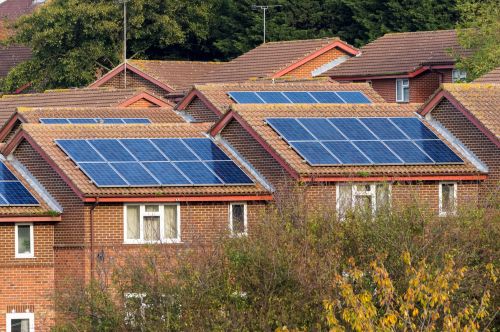
- Solar photovoltaic (PV) systems
- Air source heat pumps
- Ground source heat pumps
- District heating networks
- Battery storage
- Combined Heat and Power (CHP) systems
- Waste heat recovery systems
The report evaluates technical feasibility, space requirements, carbon savings and likely performance to identify the most suitable solutions for the project.
Question: How can an Energy Strategy Report reduce the carbon emissions of a development?
Answer: An Energy Strategy Report identifies opportunities to improve building performance before construction begins. Because the report is usually prepared during the planning and design stages, it enables design teams to incorporate energy-saving measures when changes are most cost-effective.
Potential carbon reduction measures may include:
- High-performance insulation
- Improved airtightness
- Low-energy lighting systems
- Efficient HVAC design
- Heat pump technologies
- Solar PV systems
- Reduced thermal bridging
- Advanced controls and monitoring systems
By applying these measures strategically, developers can often achieve substantial reductions in regulated carbon emissions while improving long-term operational efficiency.
Question: Does an Energy Strategy Report support net zero carbon development?
Answer: Yes. Energy Strategy Reports are increasingly used as part of wider net zero carbon and decarbonisation strategies. As local authorities continue to strengthen sustainability policies, developers are under increasing pressure to demonstrate how projects contribute towards national and local climate objectives.
The report can assess how a development aligns with:
- Net Zero Carbon targets
- Future Homes Standard requirements
- Local authority climate strategies
- Carbon offset policies
- Whole-life carbon reduction initiatives
- Sustainable design principles
This information helps decision-makers understand how the proposed development contributes towards long-term environmental goals and carbon reduction commitments.
Question: How long does it take to prepare an Energy Strategy Report?
Answer: The timescale depends on the size, complexity and stage of the project. Smaller residential schemes can often be assessed relatively quickly, whilst larger commercial, mixed-use or multi-building developments generally require more extensive energy modelling and policy review.
To prepare an accurate report, consultants typically require:
- Site plans and architectural drawings
- Building specifications
- Proposed heating and cooling strategies
- Sustainability objectives
- Planning requirements
- Relevant design information
Engaging an energy consultant early in the design process generally helps avoid programme delays and ensures sustainability measures can be integrated efficiently into the overall development strategy.
Question: Why choose Syntegra Group for an Energy Strategy Report?
Answer: Syntegra Group provides Energy Strategy Reports for developments throughout the UK, supporting clients across the residential, commercial, education, healthcare, industrial and mixed-use sectors. Our multidisciplinary team combines expertise in sustainability, building services engineering, planning compliance and energy modelling to deliver reports that satisfy both planning requirements and practical development objectives.
We work closely with developers, architects, planning consultants and project teams to identify solutions that are technically robust, commercially realistic and aligned with local authority expectations. By integrating planning policy knowledge with a detailed understanding of Building Regulations, low-carbon technologies and decarbonisation strategies, we help clients navigate increasingly complex sustainability requirements and maximise the prospects of achieving planning approval.