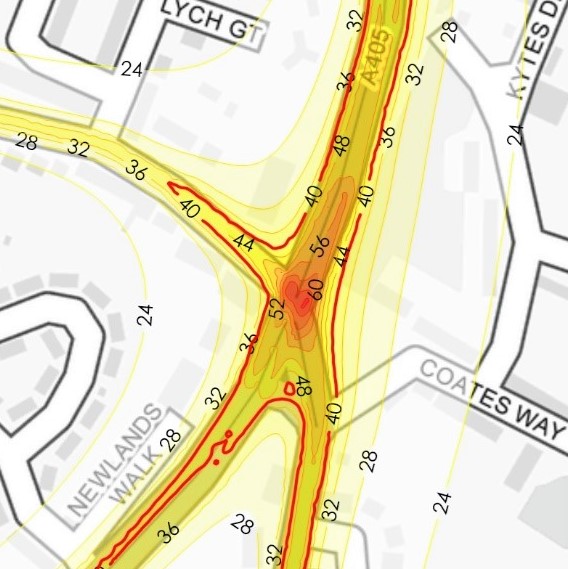
Dispersion Modelling
Predicting air quality in a given scenario (for example a new development of land-use) and/or for a future year (forecasting) is undertaken using dispersion modelling. Dispersion modelling requires computer software and detailed data input to simulate the passage of an emission as it travels through the air until it reaches ground-level. It is a valuable tool for evaluating air quality impacts and exposure against national air quality standards and objectives.
Dispersion modelling can be used at the outset of a project to help inform the design process, once a scheme is finalised, and to investigate mitigation strategies.
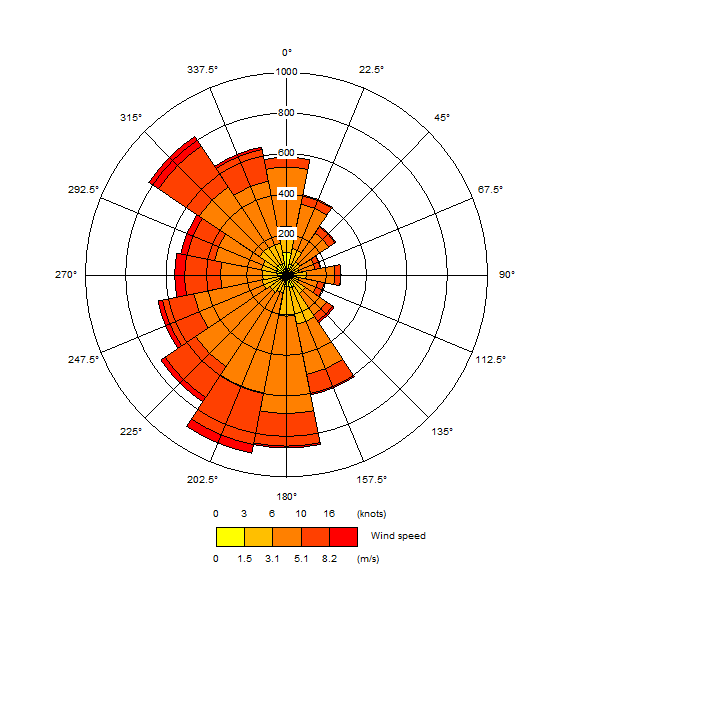
Specific considerations of the local environment can be included within the dispersion model to ensure a detailed representation of a site is produced; these include building effects, local topography, and prevailing meteorological conditions.
Screening tools are often used as a simple method of calculating dispersion which enables a preliminary conclusion to be drawn on whether the contribution of one of more sources of pollution is insignificant or potentially significant based on simple data input.
Screening Models
- Technical Guidance Note D1 Discharge Stack Heights
- Design Manual for Roads and Bridges (DMRB)
- DEFRA LAQM Industrial and Biomass Nomograms
- ADMS-Screen
- AERSCREEN
- SCREEN3
- H1 Environment Agency (EA) Risk Assessment Screening Tool
Our expert air quality consultants are proficient in the use of several dispersion models and their application to a variety of emissions source types, these include:
Dispersion Models
- ADMS
- ADMS-Roads (Extra)
- AERMOD
- Breeze-Roads
Source Types
- Point Sources
- Industrial Stack Emissions, Flares, Kitchen Flues
- Line Sources
- Road Traffic Emissions, Aircraft Emissions
- Area Sources
- Car Parking, Sewage Treatment Works, Waste Water Treatment Works (WWTW), Biofilters
- Volume Sources
- Multi-Storey Car Parks, Uncovered Gravel/Sand Piles