
Syntegra MD Alan King has welcomed a report outlining how ambitious new policies coupled with practical solutions can decarbonise the building sector and have a major impact on cutting greenhouse gas emissions.
A combination of electric, efficient and flexible solutions can decarbonise buildings, improve standards of living, and reduce energy bills “if supported by ambitious policy”, said a report from the Energy Transitions Commission, Achieving Zero-Carbon Buildings: Electric, Efficient and Flexible.
The global buildings sector “currently contributes a third of greenhouse gas emissions”, they noted, citing the use of fossil fuels for heating, cooling, cooking, lighting, powering appliances, and constructing residential and commercial buildings.
The study agrees there is not a one-size-fits-all solution for decarbonisation, as different solutions work for different building types according to countries and climates, but three key priorities are identified to help create a zero-carbon dioxide emissions buildings sector:
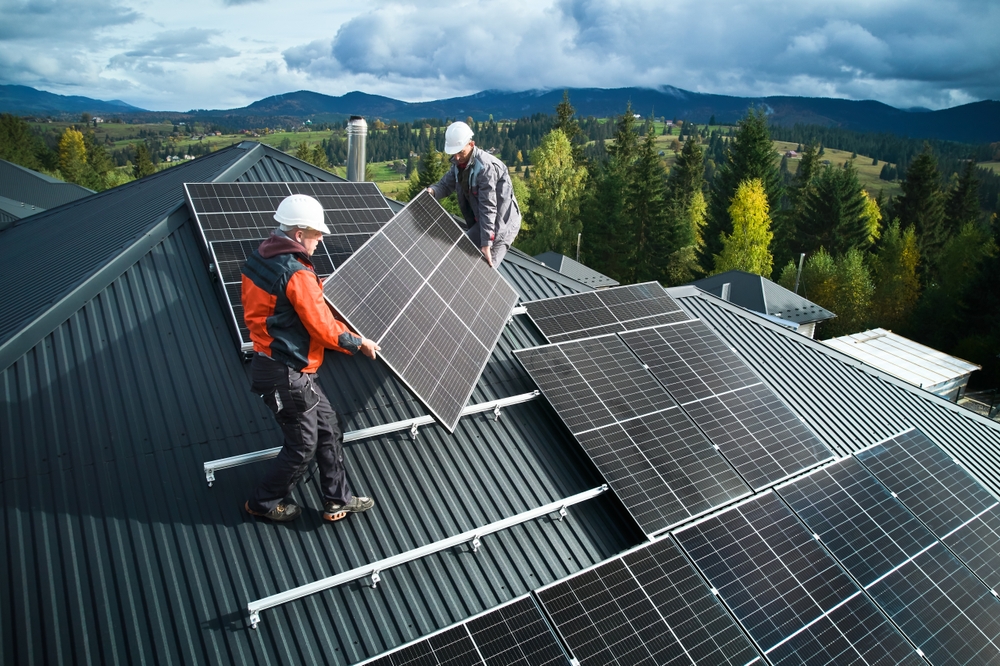
- Electrification replacing fossil fuels: Decarbonising heating and cooking is essential. Currently, gas and oil heating accounts for 8% of global emissions, or 3 GtCO2. Switching from fossil-based heating and cooking to cost-effective electric and efficient technologies, such as heat pumps and electric hobs, is vital and must be accompanied by the continued decarbonisation of electricity generation, said the report. By 2050, 80% of the energy used in buildings could be electricity which would bring annual emissions from the built environment close to zero if the electricity supply is decarbonised by then.
- Dramatically improving energy efficiency: Rising use of air conditioners and the electrification of heating and cooking would result in electricity demand for buildings almost tripling, from 12,800 TWh to around 35,000 TWh by 2050 if energy efficiency is not simultaneously increased. The report authors explained this could be reduced to around 18,500 TWh through a combination of improvements in the technical efficiency of heat pumps, air conditioners, and other appliances; improvements in the energy efficiency of both new and existing buildings, considering a range of so-called “passive heating and cooling” building design techniques, such as insulation and painting roofs white in hot countries.
Smart building management systems and consumer choices would avoid wasteful use of heating or cooling, said the report. These improvements, together with the deployment of building-level batteries and other energy storage, smart building control systems, and rooftop solar generation are particularly important for reducing the growth of peak electricity demand, which is a crucial driver of electricity system costs, it noted. - Constructing efficient and low-carbon buildings: Construction of new buildings accounts for 7% of global emissions a year, or 2.5 GtCO2. Global floor area (the area covered by buildings) is set to expand by 55% by 2050 (or 140 billion m2, which is almost 150 times the size of Hong Kong), mainly in Asia, Africa and South America. If the average carbon intensity of construction remains unchanged, this expansion would result in a cumulative 75 GtCO2 emissions between now and 2050, said the report. These emissions could be reduced to around 30 GtCO2 through a combination of:
• Decarbonising the production of steel, cement, concrete, and other building materials.
• Using fewer materials in building construction via lightweight design and modular construction or using less carbon-intensive materials such as timber.
• Better use of existing buildings via extended building lifetimes and shared working spaces.
Lord Adair Turner, chair of the Energy Transitions Commission, said: “Decarbonising the buildings sector is a story of many transitions. It’s vital for our climate goals and it’s an opportunity to improve living standards and reduce energy costs.
“Electric heating and cooking technologies will significantly improve air quality and have lower running costs than gas heating and traditional use of biomass.
“Cooling is essential to quality of life, especially as global warming intensifies due to man-made emissions.
“It is possible to achieve zero-emissions, efficient, and flexible homes with low-carbon building design techniques and technology that runs on clean electricity.”
Alan King said: “It is widely acknowledged that the construction industry is a mass producer of greenhouse gas emissions – one of the worst offenders in the world.
“With that in mind, anything that can be done to encourage the sector to play its part and help drive levels down as a matter of urgency has to be a priority.
“This report is most welcome as it spells out the gravity of the situation and some practical steps that can be implemented to improve the situation.
“In our experience, organisations are increasingly willing to introduce measures that will go some way to address the appalling emissions levels in the sector but success will only be achieved if ambitious policies drive this change.
“Companies don’t want to feel they are operating in isolation on this journey, they want to comply with policies and understand that others are also on the same page to achieve the maximum impact.”