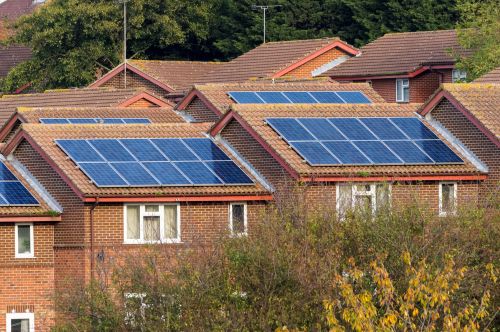
New Part L Building Regulations come into force in June this year meaning residential buildings will be required to produce 30% fewer carbon emissions and non-residential buildings 27% fewer compared with current standards.
Part L of the Building Regulations has been revised for the first time in a decade as part of the drive towards increased energy efficiency under the Government policy, the Future Homes Standard (FHS), due to be implemented in 2025.
The FHS will mandate that homes produce at least a 75% reduction of CO2 emissions.
The latest changes come into effect in June this year. The interim measures will apply to all projects after 15 June 2022, except where a building notice has been given or full plans have been submitted with local councils. However, the new regulations will apply to all projects regardless from 15 June 2023.
Housing minister Eddie Hughes said the government was ‘doing everything it can to deliver net zero’, adding that ‘changes will significantly improve the energy efficiency of the buildings where we live, work and spend our free time’.
But the amendments received a mixed response from architects and built environment representatives.
RIBA president Simon Allford said: ‘These uplifts will bring us one step closer to decarbonisation and we welcome that.
‘But without regulation of actual energy use, the built environment will not decarbonise at the rate required. Regulations must continue to tighten.
Joe Baker, head of carbon management at Haringey Council said, on Twitter: ‘There was an unprecedented response from industry to the consultation on these standards, demonstrating the appetite of both professionals and client bodies for more ambitious regulation that properly represents a built environment that meets the challenge of the climate emergency. Evidence was submitted to government that has showed what is possible – but has not been reflected.’
Julie Godefroy, head of sustainability at CIBSE, said: ‘At a local authority level, in order to achieve net zero carbon homes, we needed government to be listening to experts and pushing forward with standards that will lead us towards this goal – and sooner rather than later. Industry experts have shared with the government what is possible, but they have not been listened to.’
Alan King, Syntegra CEO, said: ‘We always advocate implementing the most energy efficient solutions in all our projects.
‘It’s encouraging that finally the reform of Part L has stopped being kicked down the road and finally been implemented.
‘Legislative steps like this put us a step closer to the UK’s Net Zero target for the sector. However, the “real” thought needs to turn to how buildings operate/perform against how they were designed to operate!’