What are the key project details and sustainability aspects of The Shard?
- Client: Renzo Piano
- Completion Year: 2016
- BREEAM Rating: Very good
- Location: London
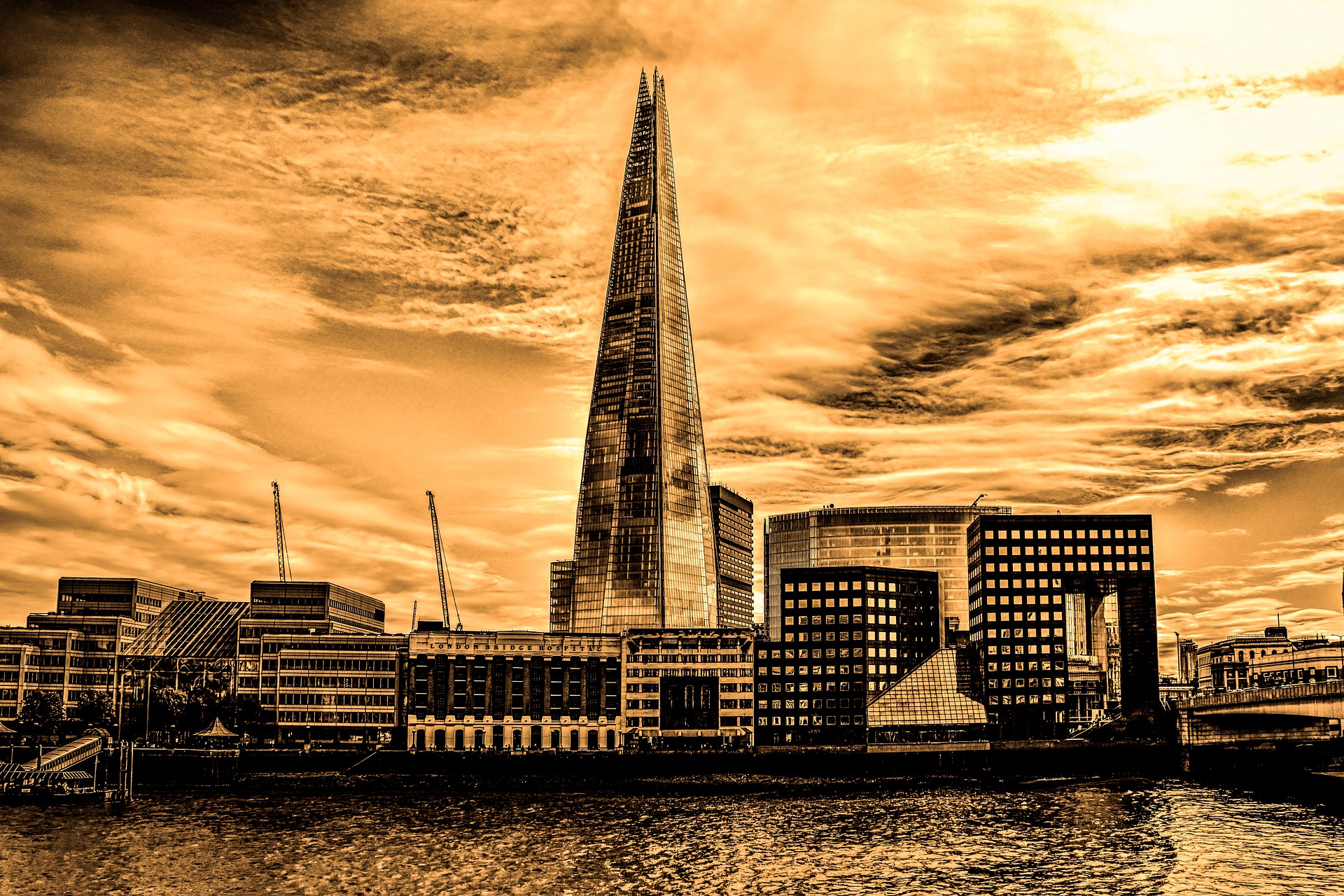
Dominating the London skyline, The Shard was conceived as a building with multiple uses: a vertical city where people could live, work and relax.
Our team were commissioned to carry out a BREEAM assessment for Levels 4, 5 and 6 of the building, prior to occupancy by HCA. The Category B Fit Out was required by the landlord to meet a BREEAM rating of ‘Very Good’.
It consists of a state of the art medical centre, a nurse base station, GP rooms, a café, showers and locker facilities.
Syntegra were appointed to work with the designer and architect to meet all criteria from conception through procurement to construction. They guided the process of achieving the sustainability requirements for the project including specification of sustainably procured materials and creation of an internal environment designed to promote health and wellbeing with effective use of daylight, good air quality and efficient lighting.
The building benefits from excellent natural light due to the floor to ceiling glazing and has 360 degree panoramic views of London.
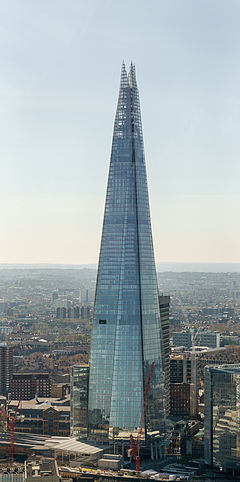
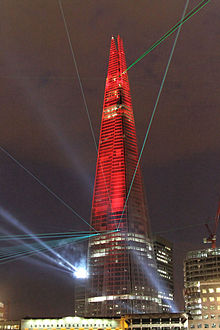
Eight sloping glass facades, the ‘shards’, reflect the light in different ways according to the outside weather conditions, seasons and time of day.
An official statement on The Shard’s website explains: ‘It required a particular technical solution to ensure the facade’s performance in terms of controlling light and heat. A double-skin, naturally ventilated facade with internal blinds that respond automatically to changes in light levels was developed.’
Irvine Sellar, The Shard’s developer and joint owner, acquired Southwark Towers, occupied by PwC, as an investment in November 1998. When the UK government shortly afterwards began encouraging high-density developments close to transport hubs, Sellar set about planning a world-class building that would capture people’s imagination. He teamed up with award-winning architect Renzo Piano to launch the project.
Piano designed The Shard as a spire-like sculpture emerging from the River Thames, influenced by the capital’s churches and masts of tall ships painted by Canaletto. The State of Qatar came on board as a partner who shared Sellar’s vision in 2008.
Pioneering engineering methods were used, such as top-down construction, where foundations are dug while the core is built up – a first for the UK – as the building reached its height of almost 310 metres making it one of the tallest buildings in Western Europe.
In 2012, The Shard was completed and officially opened by the Prime Minister of Qatar, His Excellency Sheikh Hamad Bin Jassem Bin Jabor Al Thani, and HRH the Duke of York KG.