Case Study: Internal Daylight Calculations for 162 High Street, Hounslow

You are here: 

Syntegra Consulting Ltd have been appointed as daylight modelling consultants for the proposed scheme in Hounslow (162 High Street, TW3 1BQ). The proposed scheme involves the construction of an extra storey on an existing 2 storey building.
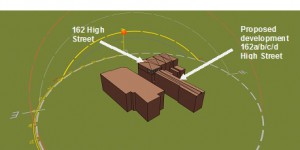
This report has been prepared to demonstrate the impact of the new development located at 162a/b/c/d High Street, Hounslow TW3 1BQ on the property located at 162 High Street.

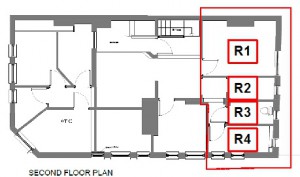
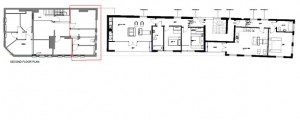
The report assesses the internal daylight factor within the rooms 1-4 in the second floor of the building at 162 High Street.
 

The assessment is undertaken in accordance with BRE 209 Digest: Site Layout Planning for Daylight and Sunlight – A Guide to Good Practice. This document states that it is also intended to be used in conjunction with the interior daylight recommendations found within the British Standard BS8206-2:2008 and The Application Manual on Window Design of the Chartered Institution of Building Services Engineers (CIBSE).


Latest Posts

Frequently Asked Questions

1 What are internal daylight calculations and why are they necessary for a project like 162 High Street, Hounslow?

Internal daylight calculations assess the amount of natural light within a building, crucial for occupant well-being and energy efficiency. For projects like 162 High Street, they are necessary to demonstrate compliance with planning requirements and optimize building design in urban environments. Syntegra Group lists "Daylight and Sunlight Assessment" as a key service.

2 What specific daylight and sunlight assessment services does Syntegra Group provide?

Syntegra Group offers a range of daylight and sunlight assessment services, including general Daylight and Sunlight Assessment, Glint and Glare Assessment, Lux Plan, and Lighting Impact Assessment. These services help evaluate and optimize natural light conditions for various development projects.

3 How do daylight assessments integrate with broader planning and sustainability goals for a development?

Daylight assessments are vital for achieving planning consent and meeting sustainability targets, such as those for BREEAM or LEED. They ensure developments provide adequate natural light, reduce energy consumption from artificial lighting, and enhance occupant comfort, aligning with environmental and building performance standards.