Question: What is an intelligent building?
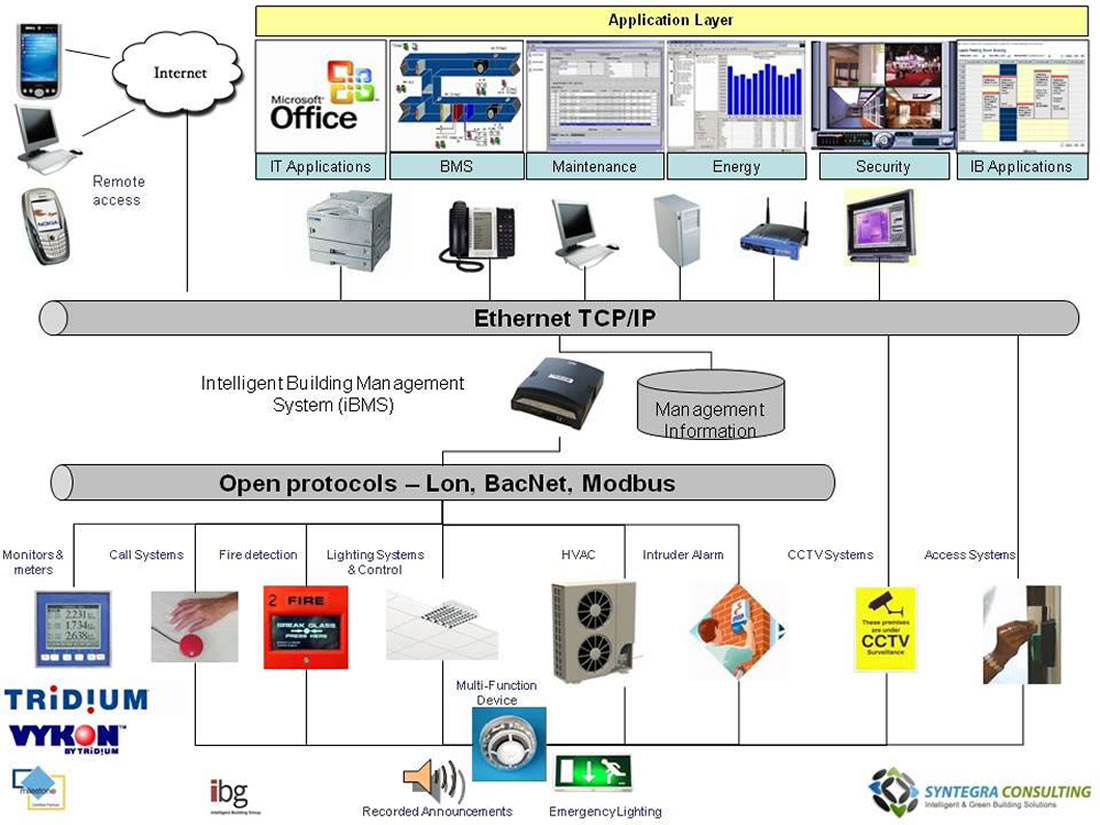
Answer: An intelligent or smart building uses integrated sensors, controls, networks and software to monitor and optimise its own performance. Systems such as heating, ventilation, lighting, blinds, security, access control, fire, lifts and metering are connected so that the building responds automatically to occupancy, weather and energy prices, improving comfort, safety and efficiency while reducing running costs and carbon.
Intelligent building consultancy designs the strategy, systems architecture and specifications needed to achieve this integration.
Question: What is smart home consultancy?
Answer: Smart home consultancy provides the same principles at a residential scale, covering lighting control, heating and hot water control, audio-visual and home cinema, security and CCTV, door entry, blinds, networks and Wi-Fi, energy monitoring and integration with solar PV, batteries and electric vehicle charging. Consultants design the infrastructure and specify systems to suit the client's lifestyle, budget and future needs.
Question: What is a Building Management System?
Answer: A Building Management System (BMS), or Building Energy Management System (BEMS), is the central control system that monitors and controls a building's mechanical and electrical services. A well-specified BMS with a clear controls philosophy is essential for energy efficiency, Building Regulations Part L compliance and BREEAM credits, and forms the foundation of an intelligent building.
Question: What standards apply to intelligent buildings?
Answer: Relevant standards and frameworks include BS EN ISO 16484 for building automation and control systems, BS EN 15232 on the impact of building automation on energy performance, CIBSE Guide H on building control systems, the SmartScore and WiredScore certifications for smart and digitally connected buildings, and cyber security guidance such as the NCSC Cyber Assessment Framework. Building Regulations Part L also sets minimum control requirements.
Question: How do intelligent buildings reduce energy and carbon?
Answer: Intelligent controls reduce energy by matching heating, cooling, ventilation and lighting to actual occupancy and conditions, optimising plant operation, detecting faults automatically, enabling demand response and integrating renewables and storage. Studies under BS EN 15232 indicate savings of 20 to 30 per cent compared with buildings with basic controls. Intelligent buildings also provide the data needed for net zero reporting and NABERS ratings.
Question: What should an intelligent building or smart home strategy include?
Answer: A strategy typically covers the client's objectives and use cases, the systems to be integrated, the network and cabling infrastructure, open protocols and interoperability, cyber security and data privacy, user interfaces and dashboards, commissioning and soft landings, and future-proofing for new technologies. Setting the strategy early avoids expensive retrofitting of cabling and controls.
Question: Why choose Syntegra Group for intelligent building and smart home consultancy?
Answer: Syntegra Group provides intelligent building and smart home consultancy alongside our mechanical, electrical, energy and sustainability services across the UK. Our engineers design integrated controls, BMS, metering and network infrastructure as part of a coordinated building services design, ensuring smart systems deliver genuine energy, comfort and operational benefits rather than complexity for its own sake.