Intelligent building systems integration offers numerous benefits, including: effective control capability for the built environment, enhanced occupant productivity/recovery levels, enhanced energy efficiency management/metering, increased energy-savings, enhanced building services operation and FM procedures, increased opportunity to pre-commission and test plant off-site, reduction in the on-site commissioning programme, increased accessibility and design flexibility of the building systems monitoring and Graphical User Interface (GUI), minimisation of unplanned system downtime and increase in corporate resilience, reduction in the level of supply chain management, procurement and associated cost, increased interoperability of sub-systems through the utilisation of Open Database Connectivity (ODBC), increased ease of scalability, a platform for an upper layer of ’IB applications’, and managed communication of all data transfer across sub-systems to assist audit trails for statutory compliance.
Intelligent building systems integration offers numerous benefits, including: effective control capability for the built environment, enhanced occupant productivity/recovery levels, enhanced energy efficiency management/metering, increased energy-savings, enhanced building services operation and FM procedures, increased opportunity to pre-commission and test plant off-site, reduction in the on-site commissioning programme, increased accessibility and design flexibility of the building systems monitoring and Graphical User Interface (GUI), minimisation of unplanned system downtime and increase in corporate resilience, reduction in the level of supply chain management, procurement and associated cost, increased interoperability of sub-systems through the utilisation of Open Database Connectivity (ODBC), increased ease of scalability, a platform for an upper layer of ’IB applications’, and managed communication of all data transfer across sub-systems to assist audit trails for statutory compliance.
What are the benefits of intelligent building systems integration?
Intelligent building systems integration offers numerous benefits, including: effective control capability for the built environment, enhanced occupant productivity/recovery levels, enhanced energy efficiency management/metering, increased energy-savings, enhanced building services operation and FM procedures, increased opportunity to pre-commission and test plant off-site, reduction in the on-site commissioning programme, increased accessibility and design flexibility of the building systems monitoring and Graphical User Interface (GUI), minimisation of unplanned system downtime and increase in corporate resilience, reduction in the level of supply chain management, procurement and associated cost, increased interoperability of sub-systems through the utilisation of Open Database Connectivity (ODBC), increased ease of scalability, a platform for an upper layer of ’IB applications’, and managed communication of all data transfer across sub-systems to assist audit trails for statutory compliance.
Intelligent building systems integration offers numerous benefits, including: effective control capability for the built environment, enhanced occupant productivity/recovery levels, enhanced energy efficiency management/metering, increased energy-savings, enhanced building services operation and FM procedures, increased opportunity to pre-commission and test plant off-site, reduction in the on-site commissioning programme, increased accessibility and design flexibility of the building systems monitoring and Graphical User Interface (GUI), minimisation of unplanned system downtime and increase in corporate resilience, reduction in the level of supply chain management, procurement and associated cost, increased interoperability of sub-systems through the utilisation of Open Database Connectivity (ODBC), increased ease of scalability, a platform for an upper layer of ’IB applications’, and managed communication of all data transfer across sub-systems to assist audit trails for statutory compliance.
Intelligent building systems integration offers numerous benefits, including: effective control capability for the built environment, enhanced occupant productivity/recovery levels, enhanced energy efficiency management/metering, increased energy-savings, enhanced building services operation and FM procedures, increased opportunity to pre-commission and test plant off-site, reduction in the on-site commissioning programme, increased accessibility and design flexibility of the building systems monitoring and Graphical User Interface (GUI), minimisation of unplanned system downtime and increase in corporate resilience, reduction in the level of supply chain management, procurement and associated cost, increased interoperability of sub-systems through the utilisation of Open Database Connectivity (ODBC), increased ease of scalability, a platform for an upper layer of ’IB applications’, and managed communication of all data transfer across sub-systems to assist audit trails for statutory compliance.
Intelligent building systems integration offers numerous benefits, including: effective control capability for the built environment, enhanced occupant productivity/recovery levels, enhanced energy efficiency management/metering, increased energy-savings, enhanced building services operation and FM procedures, increased opportunity to pre-commission and test plant off-site, reduction in the on-site commissioning programme, increased accessibility and design flexibility of the building systems monitoring and Graphical User Interface (GUI), minimisation of unplanned system downtime and increase in corporate resilience, reduction in the level of supply chain management, procurement and associated cost, increased interoperability of sub-systems through the utilisation of Open Database Connectivity (ODBC), increased ease of scalability, a platform for an upper layer of ’IB applications’, and managed communication of all data transfer across sub-systems to assist audit trails for statutory compliance.
Intelligent building systems integration offers numerous benefits, including: effective control capability for the built environment, enhanced occupant productivity/recovery levels, enhanced energy efficiency management/metering, increased energy-savings, enhanced building services operation and FM procedures, increased opportunity to pre-commission and test plant off-site, reduction in the on-site commissioning programme, increased accessibility and design flexibility of the building systems monitoring and Graphical User Interface (GUI), minimisation of unplanned system downtime and increase in corporate resilience, reduction in the level of supply chain management, procurement and associated cost, increased interoperability of sub-systems through the utilisation of Open Database Connectivity (ODBC), increased ease of scalability, a platform for an upper layer of ’IB applications’, and managed communication of all data transfer across sub-systems to assist audit trails for statutory compliance.
Intelligent building systems integration offers numerous benefits, including: effective control capability for the built environment, enhanced occupant productivity/recovery levels, enhanced energy efficiency management/metering, increased energy-savings, enhanced building services operation and FM procedures, increased opportunity to pre-commission and test plant off-site, reduction in the on-site commissioning programme, increased accessibility and design flexibility of the building systems monitoring and Graphical User Interface (GUI), minimisation of unplanned system downtime and increase in corporate resilience, reduction in the level of supply chain management, procurement and associated cost, increased interoperability of sub-systems through the utilisation of Open Database Connectivity (ODBC), increased ease of scalability, a platform for an upper layer of ’IB applications’, and managed communication of all data transfer across sub-systems to assist audit trails for statutory compliance.
Intelligent building systems integration offers numerous benefits, including: effective control capability for the built environment, enhanced occupant productivity/recovery levels, enhanced energy efficiency management/metering, increased energy-savings, enhanced building services operation and FM procedures, increased opportunity to pre-commission and test plant off-site, reduction in the on-site commissioning programme, increased accessibility and design flexibility of the building systems monitoring and Graphical User Interface (GUI), minimisation of unplanned system downtime and increase in corporate resilience, reduction in the level of supply chain management, procurement and associated cost, increased interoperability of sub-systems through the utilisation of Open Database Connectivity (ODBC), increased ease of scalability, a platform for an upper layer of ’IB applications’, and managed communication of all data transfer across sub-systems to assist audit trails for statutory compliance.
Intelligent building systems integration offers numerous benefits, including: effective control capability for the built environment, enhanced occupant productivity/recovery levels, enhanced energy efficiency management/metering, increased energy-savings, enhanced building services operation and FM procedures, increased opportunity to pre-commission and test plant off-site, reduction in the on-site commissioning programme, increased accessibility and design flexibility of the building systems monitoring and Graphical User Interface (GUI), minimisation of unplanned system downtime and increase in corporate resilience, reduction in the level of supply chain management, procurement and associated cost, increased interoperability of sub-systems through the utilisation of Open Database Connectivity (ODBC), increased ease of scalability, a platform for an upper layer of ’IB applications’, and managed communication of all data transfer across sub-systems to assist audit trails for statutory compliance.
Intelligent building systems integration offers numerous benefits, including: effective control capability for the built environment, enhanced occupant productivity/recovery levels, enhanced energy efficiency management/metering, increased energy-savings, enhanced building services operation and FM procedures, increased opportunity to pre-commission and test plant off-site, reduction in the on-site commissioning programme, increased accessibility and design flexibility of the building systems monitoring and Graphical User Interface (GUI), minimisation of unplanned system downtime and increase in corporate resilience, reduction in the level of supply chain management, procurement and associated cost, increased interoperability of sub-systems through the utilisation of Open Database Connectivity (ODBC), increased ease of scalability, a platform for an upper layer of ’IB applications’, and managed communication of all data transfer across sub-systems to assist audit trails for statutory compliance.
Intelligent building systems integration offers numerous benefits, including: effective control capability for the built environment, enhanced occupant productivity/recovery levels, enhanced energy efficiency management/metering, increased energy-savings, enhanced building services operation and FM procedures, increased opportunity to pre-commission and test plant off-site, reduction in the on-site commissioning programme, increased accessibility and design flexibility of the building systems monitoring and Graphical User Interface (GUI), minimisation of unplanned system downtime and increase in corporate resilience, reduction in the level of supply chain management, procurement and associated cost, increased interoperability of sub-systems through the utilisation of Open Database Connectivity (ODBC), increased ease of scalability, a platform for an upper layer of ’IB applications’, and managed communication of all data transfer across sub-systems to assist audit trails for statutory compliance.
Intelligent building systems integration offers numerous benefits, including: effective control capability for the built environment, enhanced occupant productivity/recovery levels, enhanced energy efficiency management/metering, increased energy-savings, enhanced building services operation and FM procedures, increased opportunity to pre-commission and test plant off-site, reduction in the on-site commissioning programme, increased accessibility and design flexibility of the building systems monitoring and Graphical User Interface (GUI), minimisation of unplanned system downtime and increase in corporate resilience, reduction in the level of supply chain management, procurement and associated cost, increased interoperability of sub-systems through the utilisation of Open Database Connectivity (ODBC), increased ease of scalability, a platform for an upper layer of ’IB applications’, and managed communication of all data transfer across sub-systems to assist audit trails for statutory compliance.
Intelligent building systems integration offers numerous benefits, including: effective control capability for the built environment, enhanced occupant productivity/recovery levels, enhanced energy efficiency management/metering, increased energy-savings, enhanced building services operation and FM procedures, increased opportunity to pre-commission and test plant off-site, reduction in the on-site commissioning programme, increased accessibility and design flexibility of the building systems monitoring and Graphical User Interface (GUI), minimisation of unplanned system downtime and increase in corporate resilience, reduction in the level of supply chain management, procurement and associated cost, increased interoperability of sub-systems through the utilisation of Open Database Connectivity (ODBC), increased ease of scalability, a platform for an upper layer of ’IB applications’, and managed communication of all data transfer across sub-systems to assist audit trails for statutory compliance.
Intelligent building systems integration offers numerous benefits, including: effective control capability for the built environment, enhanced occupant productivity/recovery levels, enhanced energy efficiency management/metering, increased energy-savings, enhanced building services operation and FM procedures, increased opportunity to pre-commission and test plant off-site, reduction in the on-site commissioning programme, increased accessibility and design flexibility of the building systems monitoring and Graphical User Interface (GUI), minimisation of unplanned system downtime and increase in corporate resilience, reduction in the level of supply chain management, procurement and associated cost, increased interoperability of sub-systems through the utilisation of Open Database Connectivity (ODBC), increased ease of scalability, a platform for an upper layer of ’IB applications’, and managed communication of all data transfer across sub-systems to assist audit trails for statutory compliance.
Intelligent building systems integration offers numerous benefits, including: effective control capability for the built environment, enhanced occupant productivity/recovery levels, enhanced energy efficiency management/metering, increased energy-savings, enhanced building services operation and FM procedures, increased opportunity to pre-commission and test plant off-site, reduction in the on-site commissioning programme, increased accessibility and design flexibility of the building systems monitoring and Graphical User Interface (GUI), minimisation of unplanned system downtime and increase in corporate resilience, reduction in the level of supply chain management, procurement and associated cost, increased interoperability of sub-systems through the utilisation of Open Database Connectivity (ODBC), increased ease of scalability, a platform for an upper layer of ’IB applications’, and managed communication of all data transfer across sub-systems to assist audit trails for statutory compliance.
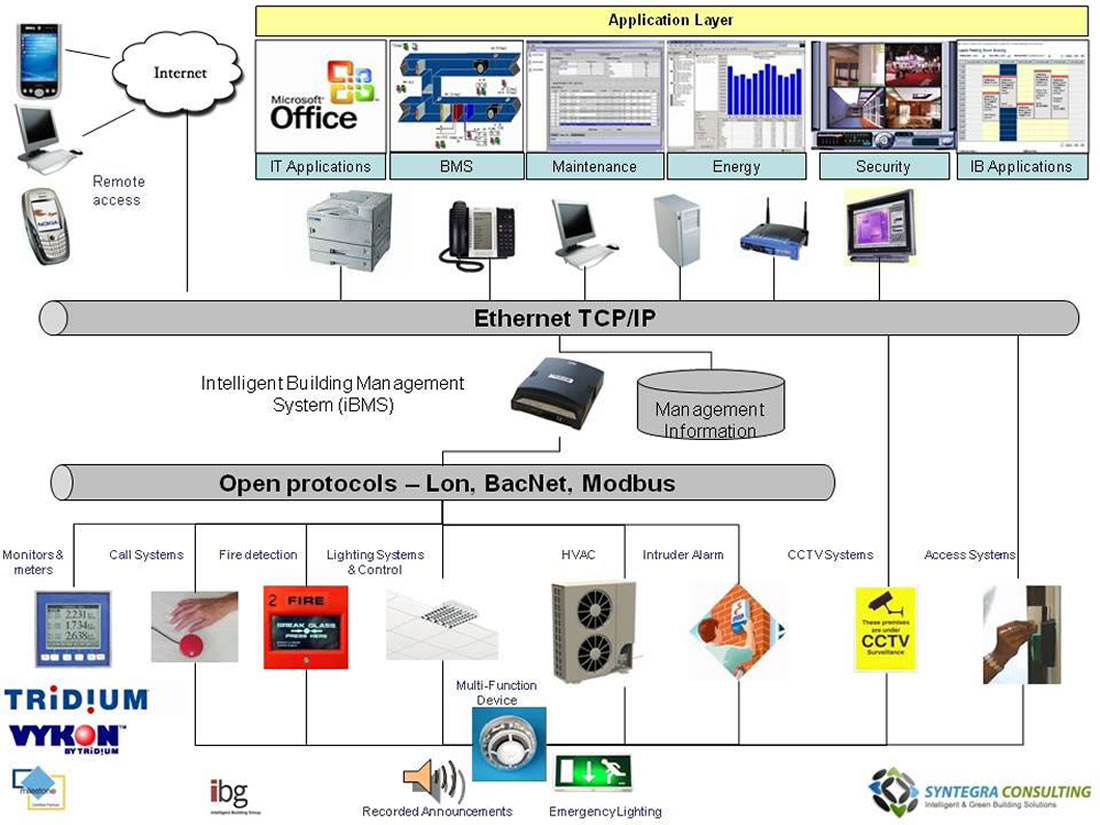
Click here to see: The Syntegra Network Diagram
Intelligent building systems integration offers numerous benefits, including: effective control capability for the built environment, enhanced occupant productivity/recovery levels, enhanced energy efficiency management/metering, increased energy-savings, enhanced building services operation and FM procedures, increased opportunity to pre-commission and test plant off-site, reduction in the on-site commissioning programme, increased accessibility and design flexibility of the building systems monitoring and Graphical User Interface (GUI), minimisation of unplanned system downtime and increase in corporate resilience, reduction in the level of supply chain management, procurement and associated cost, increased interoperability of sub-systems through the utilisation of Open Database Connectivity (ODBC), increased ease of scalability, a platform for an upper layer of ’IB applications’, and managed communication of all data transfer across sub-systems to assist audit trails for statutory compliance.
Intelligent building systems integration offers numerous benefits, including: effective control capability for the built environment, enhanced occupant productivity/recovery levels, enhanced energy efficiency management/metering, increased energy-savings, enhanced building services operation and FM procedures, increased opportunity to pre-commission and test plant off-site, reduction in the on-site commissioning programme, increased accessibility and design flexibility of the building systems monitoring and Graphical User Interface (GUI), minimisation of unplanned system downtime and increase in corporate resilience, reduction in the level of supply chain management, procurement and associated cost, increased interoperability of sub-systems through the utilisation of Open Database Connectivity (ODBC), increased ease of scalability, a platform for an upper layer of ’IB applications’, and managed communication of all data transfer across sub-systems to assist audit trails for statutory compliance.